

How to Start an EV Charging Business in the US: Investment, Location, Revenue and the Economics Behind the Model Essay

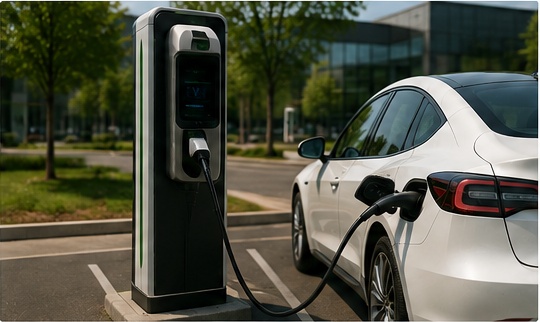
While electric-vehicle charging may seem like a technology, the operation of a charging station is more akin to a real-estate, energy, customer service and transportation business. The charger itself is just one element. Other considerations include the location, power, equipment, software, maintenance, payments, insurance, and customers. These factors make the EV charging industry an intriguing opportunity for entrepreneurs, as the business involves not only the technology but also an element of control over a desirable asset.
At the same time, potential investors and operators should recognize that not all sites are created equal. A charging station is a fixed asset that is subject to the laws of supply and demand. In other words, an EV charging business is not a guaranteed money-making machine, even if the technology is sound. Location analysis is, therefore, a critical element of this type of venture. An entrepreneur should begin their research by identifying the target customer base, how long they are willing to spend at the charging station, how much electricity can be accommodated at the site, what the competitors are charging, and whether the site can support the infrastructure.
What is an EV Charging Business?
An EV charging business can take many forms. In some cases, it involves providing electric-vehicle drivers with access to charging stations in exchange for a fee. In other cases, businesses can use the charging stations as an incentive to visit their location. Some EV charging companies operate publicly accessible fast-charging stations while others are privately owned and only open to specific customers.
For example, a hotel, apartment, office, retail store, parking garage, or transportation company can own a charging station and charge drivers for using their facilities. An EV charging business, therefore, can be a public or private endeavor depending on the target market. Fast-charging stations are typically designed for drivers who seek to minimize the time spent at the charging station. By contrast, Level 2 chargers are more suitable for locations where drivers are willing to spend more time. For example, a hotel, office, or apartment complex can benefit from having a Level 2 charger since customers, employees, or residents are already at the site for an extended period. By contrast, a highway charging station has a different set of considerations because drivers are more concerned with getting to their destination as soon as possible. As this example illustrates, the technology of a charging station depends on the location and target customer base.
How the Business Makes Money
The most obvious source of revenue from an EV charging business is the fees paid by drivers. However, an operator of a public charging station can generate revenues from several sources.
For example, a business can sell memberships or have a partnership with companies that use the charging station. Additionally, an EV charging station can generate revenues from advertisements, parking, and other retail sales. In other words, a business should think beyond the fees paid by drivers and explore synergies with other local businesses.
By way of example, a shopping mall can view the EV charging station as a way to attract customers rather than a means to generate direct revenues. In this case, the mall benefits from the presence of the station because drivers are willing to spend money at local businesses while their cars are charging. At the same time, a public charging station at a corporate office building has different dynamics, as the value proposition is focused on employee retention. In all cases, an entrepreneur should carefully consider the value of an EV charging business to a particular location.
How Much Does It Cost to Start?
An EV charging business can have dramatically different start-up costs depending on the technology, location, and target market.
For example, a small Level 2 charging station at an existing property has very different requirements compared to a public fast-charging station with multiple ports. The equipment is only one element of the costs, as an entrepreneur should also consider trenching, transformers, switchgear, permits, engineering, and construction. In other words, the costs can vary significantly depending on the project scope.
In some cases, a small business owner can begin with a few Level 2 chargers at their existing property. By contrast, a larger project may require a significant investment on the part of the entrepreneur. In particular, fast-charging stations have much higher electricity requirements, which means that an existing electrical service may not be sufficient for such a venture. An entrepreneur, therefore, should consult with an electrical engineer to review the requirements and costs before purchasing any equipment. In short, a fast-charging station at a desirable location can be a lucrative investment, but it may also be associated with very high costs.
Why Location is More Important Than the Charger
When considering an EV charging business, many entrepreneurs begin their research by comparing the charger manufacturers. In reality, a driver is unlikely to choose one charging station over another based on the technology. Instead, they will seek out the most convenient location that offers the power they need. In other words, a charger is just one element of a much larger system. A site near a highway, shopping mall, hotel, apartment complex, office building, or transportation hub has different requirements and opportunities. An entrepreneur, therefore, should carefully evaluate the traffic, local EV ownership, competition, parking, amenities, and time spent at the location.
Federal Incentives Need Careful Checking
The US federal government offers tax incentives for EV charging stations. However, these incentives are only available for qualifying projects and can expire at any time. For example, the IRS Alternative Fuel Vehicle Refueling Property Credit can be claimed for qualified business property placed in service through June 2026. In other words, a business owner should always consult with a tax professional to identify incentives that are available at the time of installation.
How the Revenue Calculation Works
Let us assume that a particular EV charging location has four ports, with each port delivering 15 charging sessions per day. This means that the four ports will deliver 60 charging sessions on average. However, this statistic alone does not provide much information to an entrepreneur. In reality, the revenue from these sessions depends on the average energy per session, electricity costs, demand charges, payment processing fees, maintenance, lease, and financing costs.
For example, if the gross revenue from these 60 daily sessions is equal to $12 per charging session, 60 sessions would produce $720 per day, or approximately $21,600 per month before expenses. This is just an example, but it illustrates the main point: an entrepreneur should think in terms of gross margin rather than gross revenues. In particular, an EV charging business owner should carefully consider the electricity costs since they can be prohibitively high for commercial accounts. At the same time, the demand charges can vary depending on the local utility company. In short, a public EV charging station can be a profitable endeavor, but an entrepreneur should always analyze the electricity costs at a particular location.
Fleet Charging Could be a Different Business
In some cases, a commercial fleet may be a better option than a public charging station.
For example, a delivery company, taxi service, government agency, or car rental company may need a private EV charging station. In other words, a fleet operator will have a captive audience at the charging station. As a result, an entrepreneur can develop a long-term business relationship with a commercial customer rather than trying to attract passers-by at a public charging station.
A fleet-focused EV charging business has its advantages and disadvantages. On the positive side, the captive audience means that the entrepreneur has a stable and predictable customer base.
On the other hand, a commercial fleet may require significant infrastructure improvements. Additionally, a fleet operator may prefer to own the equipment rather than lease it from a third party. An entrepreneur, therefore, should evaluate the needs of a potential commercial customer and determine whether a private EV charging station is a viable option.
What Can Make the Business Difficult?
An EV charging business is a long-term investment that requires significant capital. As a result, an entrepreneur should always think about the worst-case scenario.
For example, a charging station that is only partially occupied is still a financial burden because it requires electricity, maintenance, and, potentially, financing costs. At the same time, an entrepreneur should be aware of the local electricity rates since they can be much higher for commercial accounts. Another challenge includes the reliability of the equipment, as a public EV charging station with frequent malfunctions will quickly develop a bad reputation. In other words, an entrepreneur should always think about the maintenance and monitoring of the charging equipment.
A Smaller Way to Enter the Market
An entrepreneur does not have to build a large public EV charging station as their first project. In fact, it may be a good idea to start small and only use one or two Level 2 chargers. At the same time, an entrepreneur can also partner with a private business to install a charging station at their location.
For example, a hotel, apartment complex, office building, restaurant, or retail store can be interested in providing EV charging options to their customers or employees. In this case, the entrepreneur can install and maintain the equipment while the private business benefits from the added convenience. This option can be much more attractive to a small business owner since they do not have to worry about the costs and risks associated with a public EV charging station.
Final Notes
An EV charging business may seem like a simple endeavor: purchase a charger, install it at a desirable location, and collect the fees from drivers. In reality, an entrepreneur should think of an EV charging station as a fixed asset that requires extensive planning, substantial capital, and ongoing maintenance. In other words, an EV charging business is much more similar to real-estate development than a technology venture.
As a result, an entrepreneur should always think about the long-term value of an EV charging station rather than short-term gains. For example, a well-chosen location with reliable equipment can become a valuable asset for years to come, whereas a public charging station at a busy highway may become obsolete in a matter of months.
Charging Business charging station EV Charging EV Charging Business EV charging industry
Last modified: August 16, 2026


[…] if there’s already an expense, time investment, or workaround involved with avoiding a nuisance, it means those individuals will be willing to […]