

Explaining Zero Knowledge Proofs, The Crypto Technology that Can Prove Something Without Revealing Everything

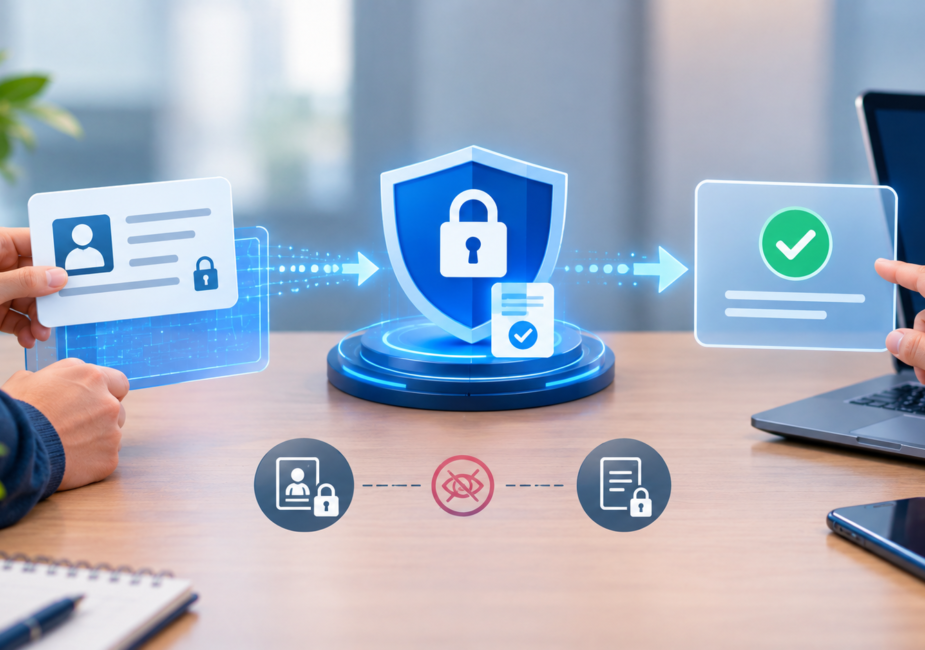
Zero-knowledge proofs are one of the most interesting, yet difficult-to-understand concepts in cryptocurrency technology.
The initial idea is virtually impossible. One person may be able to prove a statement is true without explaining the information that he or she relied on to make the statement.
This technology may be used for other purposes aside from cryptocurrency. It is being researched for use to enhance privacy and verification, and for digital systems such as voting, where individuals must prove something without revealing unnecessary personal or business information.
Zero-knowledge technology might be a crucial component in the evolution of blockchain networks’ mechanisms for privacy and verification for the crypto sector.
Understanding the Basic Idea
Suppose a web page has to determine if you have a specific need. Typically, someone would offer a document with a lot more information than the website needs.
A zero-knowledge proof alters the process. A cryptographic system can create proof of the veracity of a given statement, without conveying all of the underlying information.
The receiving system can then check the proof without requiring to receive the original information.
The gist of zero-knowledge proofs is the following: The mathematics of the technology may be quite involved, but its fundamental idea is quite simple: show the fact, but not show all the fact.
Why is this significant for Cryptocurrencies?
All Blockchain networks are based upon clear and verifiable records. That transparency can be beneficial as each player can check their own transactions and activity.
But transparency also poses privacy problems.
Individuals and entities might not wish everyone to know all the information regarding a transaction or activity. Zero-knowledge technology is a process to establish that some data is correct, but not to disclose any underlying information.
This is why this is an interesting topic for blockchain developers focused on privacy applications.
A Simple Example
Let’s say that a digital service requires an assurance that a user has the money to make a transaction.
A traditional method might involve the person giving financial information in depth.
By using a proper zero-knowledge system, the user can be able to show that the required condition is true without exposing all the details of his/her finances.
This principle is the same as above – the system is used to check a claim rather than to get all the information behind the claim.
The storage of transactions is not the only thing that the Zero-Knowledge Technology is used for.
The idea behind Zero-Knowledge Technology is far from being just about concealing transactions.
It would be a mistake to think of zero-knowledge proofs simply as a tool for anonymous cryptocurrency transactions.The technology could also be applied to scaling up blockchain networks.
There are systems that can perform many activities without needing to be a part of the main blockchain, and then give cryptographic proof that the calculations were carried out correctly.
The main network doesn’t need to process each individual operation, it can just validate the proof.
This results in a unique privacy and efficiency.
Some data may be managed off-chain, with the blockchain receiving a “proof” that leaves it with less data to store and process itself.
A middle ground between privacy and regulation has been reached.
The most challenging question with privacy technology for financial systems is how to allow users to enjoy privacy while still letting banks and other financial institutions conduct the necessary checks?
Zero-knowledge systems might be able to contribute in a more selective way for verification.
For instance, it could be necessary for someone to establish a certain qualification without showing personal information irrelevant to that. A financial service might want to verify that some requirements have been met but not expose an entire customer profile.
This is a wider issue of achieving privacy while maintaining traceability and accountability in digital payment systems, as highlighted in recent research work on privacy-enhancing technologies for digital payment systems.
Technological solutions do not determine the means of regulating such systems. It is just a different technical means to design them!
There are still practical issues with technology.
Zero-knowledge proofs are very strong, but they’re not the magic bullet.
Specialized cryptographic expertise can be needed when developing such systems. Reliable software, appropriate infrastructure, and thorough security testing are also requirements for applications.
Poor system design can mean that privacy doesn’t operate as intended. But developers should also take into account how users will regain access to their accounts, how their credentials will be managed, and how different systems will communicate with each other.
That is why it’s expected that zero-knowledge tech will evolve slowly, and not be implemented immediately.
Where could it go next?
One of the more interesting scenarios is that it might be possible for users to be using zero-knowledge technology without realizing it.
One of the simplest ways for a website is to display a verification screen. A financial test may be made to establish eligibility. If a large number of transactions is verified to be processed correctly, a blockchain network could confirm it.
The small user interface could be a sign of some cryptographic proof in action.
This might simplify the use of privacy technology devices for business and regular folks.
A NEW Use of Blockchain Privacy.
Blockchain technology got its name from the creation of a transparent and digital record of transactions. Zero-knowledge proofs provide another option: verification doesn’t need to be done in full.
This concept may have applications in the fields of cryptocurrency, digital identity, financial applications, and blockchain scalability.
The technology is still maturing and will rely on software quality, standards, security, and regulation to be implemented in practice. However, the idea itself is strong.
Private finance in the future is not all concealed. It can involve being able to demonstrate exactly what’s required, and nothing more.
Blockchain Privacy Blockchain Scalability Crypto Technology Digital Identity Zero-Knowledge Proofs
Last modified: October 6, 2026