
AI Data Centers in 2026: Why Cooling, Power and Capacity Are Becoming Strategic Business Decisions

The infrastructure behind the AI economy
Artificial intelligence is often described through models, software and new workplace tools. Yet the physical facilities that make these systems run are becoming just as important. Data centers need dependable electricity, cooling, networking, security and maintenance. As organizations adopt more demanding computing workloads, infrastructure planning has moved from a technical detail to a boardroom concern. The central business question is no longer simply how much computing capacity a company can purchase. It is whether that capacity can be installed, powered, cooled and operated economically.
Why electricity changes the calculation
The total cost of operating computing equipment includes much more than the initial server purchase. Electricity bills, backup power, distribution equipment and the cost of expanding a utility connection can determine whether a new facility is commercially attractive. Operators also have to think about reliability. A disruption can affect customers whose applications depend on continuous access. That makes site selection, utility relationships and realistic capacity forecasting critical parts of a data-center investment decision.
Cooling is an economic variable
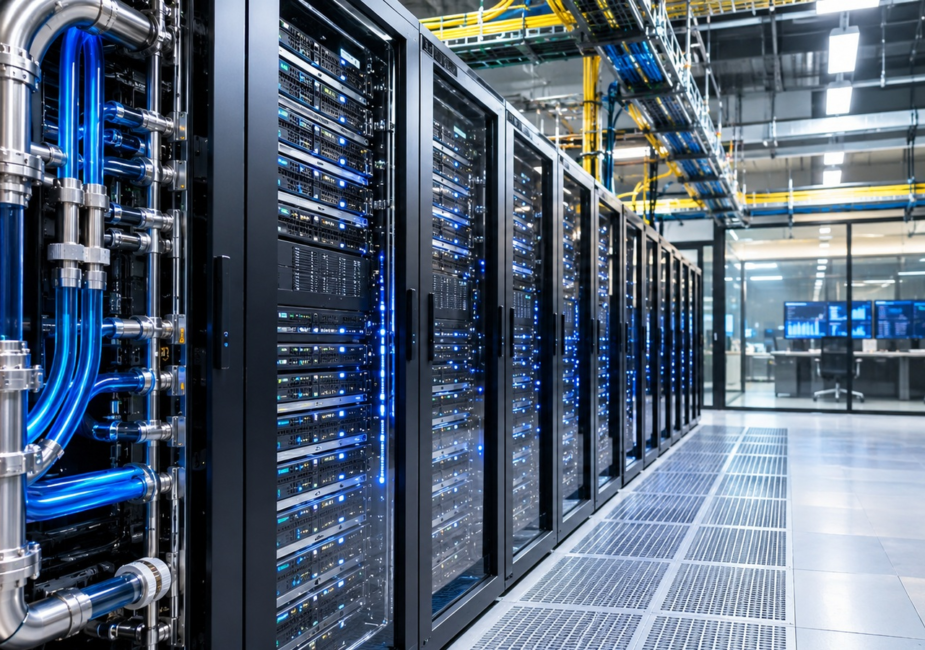
Traditional air cooling remains useful in many environments, but high-density computing creates concentrated heat that can be difficult to manage efficiently. Liquid-cooling designs can move heat closer to its source, although they introduce their own installation, monitoring and maintenance requirements. There is no universal best architecture. The appropriate choice depends on rack density, available water and power, climate, facility design, equipment compatibility and the operator’s risk tolerance.
Capacity planning and financial discipline
Building too little capacity can delay customer deployments; building too much can leave expensive assets underused. Operators therefore need to model different utilization scenarios rather than treating announced demand as guaranteed revenue. Long construction schedules, supply-chain constraints and specialized labor add uncertainty. Financial models should distinguish committed customer contracts from prospective demand and account for operating expenses, depreciation, financing and eventual equipment replacement.
A wider supplier ecosystem
The expansion of computing facilities creates opportunities for electrical contractors, cooling specialists, component manufacturers, monitoring software providers and maintenance teams. Some of these businesses can serve multiple facility operators without owning a data center themselves. However, safety, engineering standards and contractual reliability requirements are substantial. New entrants benefit from a narrow specialization and credible technical partnerships rather than broad promises to deliver every part of a complex facility.
What businesses should watch
For customers purchasing AI infrastructure, the most useful questions concern service reliability, geographic concentration, cost transparency, security and the provider’s ability to scale. For investors, attention should go to utilization, power availability, project execution and the gap between projected and realized demand. The AI economy may be digital, but its physical foundations have measurable constraints. Companies that understand those constraints are better positioned to build sustainable businesses.
Last modified: November 18, 2026