

Keep in mind that managing money is more than just about saving, when it comes to financial resiliency in 2026.

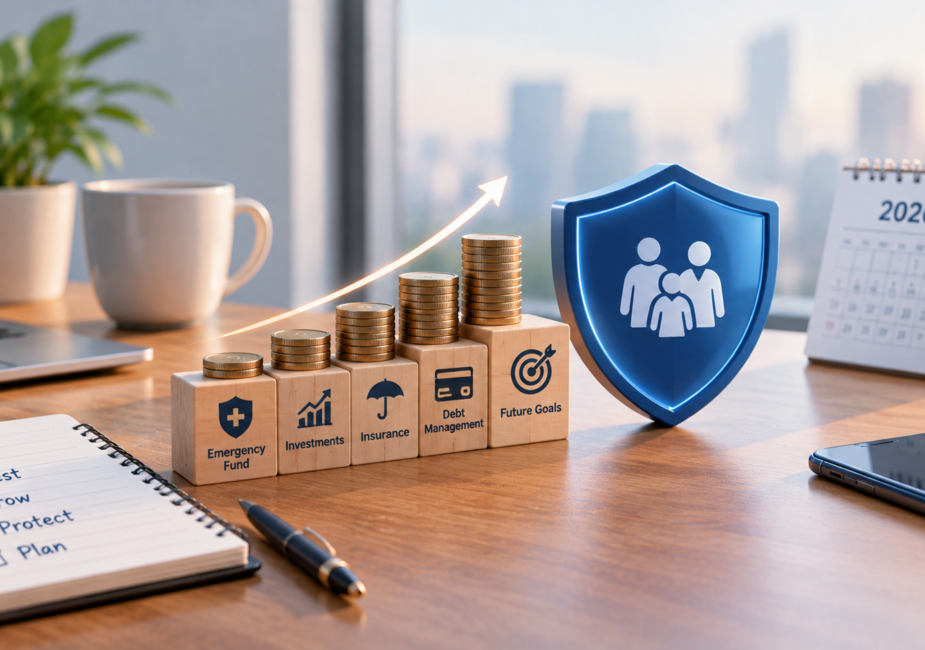
In 2026, managing money isn’t just about making higher levels of income; it’s really about getting ready for unexpected shifts. Household budgets can also be impacted in unpredictable ways by higher living costs, changing job conditions, digital financial services and economic uncertainty.
This has led to money being top of the agenda in personal finance. Financial resilience is the ability to have enough flexibility in your finances to cover an unexpected expense, income disruption or big life change without immediately falling into serious debt. It’s not about getting rich quick. It’s about setting up a financial framework that can withstand stress.
New research from PwC has revealed that some consumers are becoming more conservative, and are considering not just return, but also liquidity and emergency preparedness.
What financial resilience really means
It’s easy to mistake financial resilience for having a lot of savings. While it’s important to save, resilience can be attributed to a number of elements in a person’s financial life.
A financially resilient household might have savings on hand for emergencies, manageable debt, predictable essential expenses and a plan for addressing short-term debt challenges. It could also be quite flexible enough to trim down unnecessary expenses if the situation alters.
This is a different way to do things than anticipating all the financial issues. No one knows when a car repair, job change, family expense or unexpected bill will arise. The idea is to prevent one challenge scenario from escalating into a far bigger financial challenge.
Having an emergency savings account can provide time to breathe
An emergency fund is one of the easiest things to do. It is not an investment that boasts large profits. It is designed to offer easy access to cash in case of an unexpected event.
An emergency fund is designed to help cover unforeseen expenses like unexpected repairs, loss of income or any other essential expenses without the need to take out loans. AARP 2026 Financial Security Trends Survey research reveals that emergency savings and individuals’ financial security are closely linked.
This will vary depending on income, household duties and day-to-day expenses. A person on a steady income and low fixed expenses might not need the same as a person who is on a fluctuating income. The key is to slowly develop a savings account to tap into when it’s truly needed.
Debt administration is a part of money stability.
While being cashflow positive on rent, you may find it hard to be cash flow positive on debt repayments. When you have to pay your debts each month, you may not have enough money to cover emergencies, future expenses and daily living costs.
What this does not imply, however, is that all kinds of borrowing are bad. What is crucial is whether the loans are affordable for the family. Before entering into new credit, consumers should be aware of the interest costs, repayment timeline and the total amount of repayment they will make.
High consumer debt has been identified as one of the major risks for consumers along with financial scams and low financial literacy by the OECD’s Consumer Finance Risk Monitor 2026.
An effective financial plan takes both of these factors into account, looking to create a plan that will build savings but hopefully not get to the point where increasing debt becomes cumbersome if things do not go as expected.
A budget should reflect life realities.A budget should be living and breathing.
A budget is not meant for making it look great on paper, but then to become unmanageable over a couple of weeks. A useful budget should be realistic of how individuals spend money.
Usually, basic necessities like housing, food, utilities, transportation and other key financial obligations should be distinguished from other expenses that can be altered if needed. This will give a better idea of the margin of flexibility.
Financial decisions can be made easier also during uncertain times, with the aid of budgeting. A person can plan for expenses instead of making decisions based on emotion after an unexpected event happens, by knowing what expenses are necessary and what expenses are not so necessary that they need to be kept up for the time being.
Digital finance offers both convenience and new risks.Digital finance provides convenience and new risk.
Current financial devices have made movement of cash, checking accounts and paying payments easier. But, more convenience demands more awareness.
Financial scams and fraud continue to be a significant consumer risk in 2026, with digitalisation bringing new opportunities and challenges for those less adept at digital and financial skills, according to the OECD.
So consumers should be mindful of account security, strange messages, unknown payment requests and requests for sensitive financial information. While saving and budgeting are important aspects of a strong financial plan, safeguarding the money you have earned is also critical.
Financial resilience is a habit that takes time to develop.
Developing financial resiliency is not typically accomplished through a single step. It grows as a result of consistent behaviors, like tracking spending, building an emergency cushion, and being strategic about debt and regularly reevaluating financial objectives as situations evolve.
The greatest advantage is flexibility. A financially literate individual can make choices and may not have to make a hasty decision when an unexpected expense arises.
That flexibility is an important component of financial wellbeing in 2026. Instead of just questioning whether a person has the funds to make a lot of money, the question is changing to whether he or she has a financial system robust enough to survive change.
Looking ahead
Financial resilience is not about eliminating all financial risks. It involves anticipating the risks that can reasonably be expected to occur, and leaving some room to deal with the unexpected.
This can range from simple measures for individuals and families: knowing where cash is going each month, having easy access to savings, and using debt wisely and preventing fraud on financial accounts.
These fundamental guidelines are still applicable in the current economic climate and financial technology landscape. A high level of financial strength does not equate to high financial returns. Many times it’s the one that provides a person with the stability and flexibility they need in order to deal with what happens next.
Emergency Savings Financial Planning Financial Resilience Money Management Personal Finance
Last modified: October 8, 2026