In 2026, AI Agents are changing from answering to acting with intelligent software

In the past few years, AI has been getting better at answering questions, writing content, generating images and finding information. Another area of technology that is gaining increased attention in 2026: AI agents.
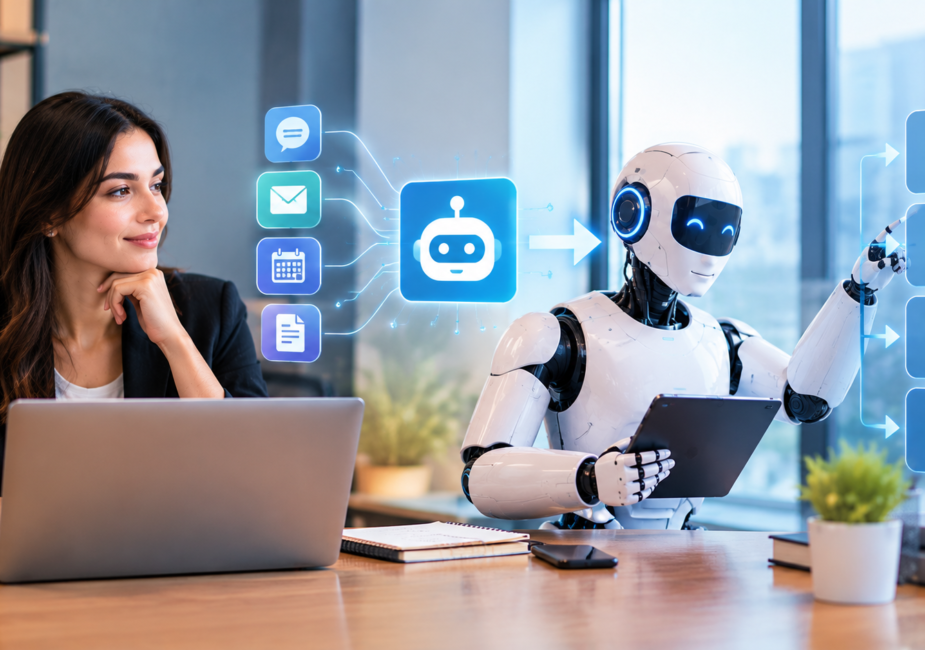
An AI agent can be programmed to take multiple actions to achieve a specific objective, beyond simply reacting to an input message, unlike a traditional chatbot. It can structure information, marshal connected software, execute tasks, validate outcomes and then proceed until the task completes to a specific stage, depending on the system. The change has shifted the perception of the role of AI in the workplace. Google Cloud believes 2026 will be a year when agents transition from individual tasks to bigger workflows.
What is special about an AI Agent?
When someone speaks about an AI agent, it is best to think of it as a normal AI assistant.
When a user asks a chatbot to summarize a document, the chatbot generates a summary of the document and waits for the next command. An agent may be constructed to deal with a more extended series of steps. It can be given a goal, figure out what to do, have tools at its disposal, and modify the next action depending on what it discovers.
This isn’t to say that all AI agents work in isolation. There are still systems that need people to approve important actions and/or to control the process. As AI agents grow more capable of acting on behalf of users, NIST’s 2026 AI Agent Standards Initiative underscores the importance of secure, interoperable systems.NIST’s 2026 AI Agent Standards Initiative emphasizes the need for secure, interoperable systems as AI agents increase in their capabilities of acting on behalf of users.
From Chat to Work with AI.
This shift is significant as it transcends the mere question-and-answer format typical of AI interactions.
Suppose one of the employees of a business has to make a weekly report. The agent-based workflow might be able to gather information from various sources which have been approved, sort through it, find changes, put it into a draft and then return it to the person for further review.
The staff member would still need to review the final work, but much of the preparation work could be carried out in the background.
Hence, AI agents are gaining traction from businesses for one reason. Not only is the technology being used for writing or research, but also for tasks that involve multiple consecutive actions.
Entrepreneurs can also tap into the same concept.
AI agents are not only relevant to large technology companies.
AI-powered workflows can also be useful for small businesses. For instance, in a small online store, the activities related to product information, customer enquiries, order updates, and internal records can be repetitive. Recurring work can occur around appointments, quotations, follow-ups and documentation for a service company.
But whether a business actually requires an “AI agent.” Indeed, the more important question is what repetitive process might benefit from intelligent support.
According to a recent report by the JPMorganChase Institute, small-business use of AI is gaining momentum, but the adoption rate varies among small businesses and by industry.
Human Review Still Matters
The growing capabilities of AI agents do not remove the need for human judgment.
An agent could complete several tasks in a short period of time but also misinterpret information, make an incorrect assumption, or make a decision that is not reflective of the business’s intentions.
This is particularly relevant if an AI system has access to any other information about a customer, financial information, company documents, or any other external services.
There has also been a recent concern regarding privacy, security, payment, and conumer protection with the use of AI-powered shopping agents.
This is why businesses need to determine what actions to let AI do automatically and what actions to submit for human approval.
The new challenge is in selecting the right workflow.
A common pitfall businesses can fall into is adopting AI just because it’s in vogue.
If it’s a real problem – that’s when an agent can help. For a process that is already simple and only takes two minutes, implementing an AI system might end up making things more complicated.
A better place to begin is a repetitive workflow with a number of predictable steps. The business can outline what’s happening, determine where AI could assist, and reserve human decision-making for when there’s a need for accuracy or responsibility.
This method also allows for more convenient evaluation of usefulness of the technology.
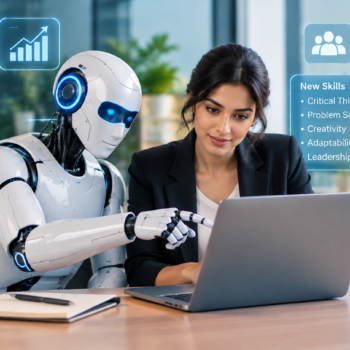
The AI Agents will require more business skills in the vicinity.
There is nothing more important than the technology, it is the process, the method, the workflow, that decides the success or failure of an AI.
Employees must be familiar with the system, what information it has access to, when its output is to be reviewed, and what types of decisions are to be made by people, not the system.
Google Cloud’s research also highlights workforce training as a key element to transition to agent-based work in 2026.
It is not just a software choice to adopt AI. It is also a process and a training decision.
Thinking with a different lens of AI in 2026
Perhaps the most intriguing development in AI is that machines can now generate more compelling responses. Perhaps software is slowly beginning to allow us to undertake longer, more complex sets of tasks.
This isn’t to say that all jobs or business processes will immediately be automated. The real-world systems have their own issues of accuracy, privacy, security, access to information and human oversight.
In business, the real possibility is to start small. Identify one repetitive workflow, try to identify where the AI can help, read the results and only grow when it is beneficial.
Today, conversations surrounding AI are shifting from “What can AI tell me?” to a more practical one: “What work can AI help me complete?”
As AI agents become more sophisticated, that change will be one of the most significant in the world of business technology today.
AI Agents AI Automation Business Technology Intelligent Workflows Small Business Technology
Last modified: September 26, 2026